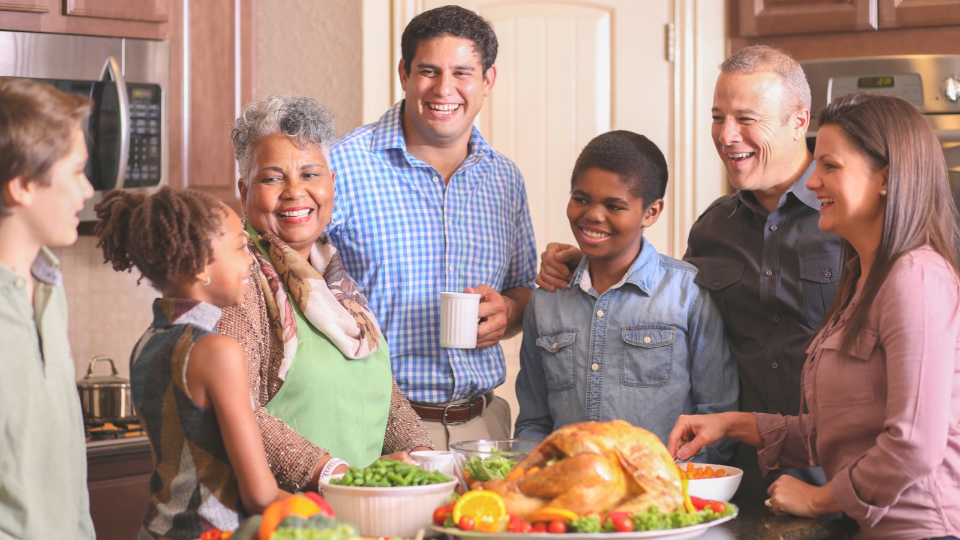
Thanksgiving is often portrayed as a time of gathering around a table filled with food, laughter, and loved ones. For many, it is a cherished tradition filled with warmth, gratitude, and connection. But the reality of the holiday is that it looks different for every family—and every individual.
Behind the familiar images of Thanksgiving celebrations are different traditions, relationships, histories, circumstances, and experiences. Some families gather with generations of relatives, while others celebrate with close friends, chosen family, or quietly at home. Some embrace longstanding traditions, while others create entirely new ones.
There is no single right way to celebrate Thanksgiving, and understanding this can help us approach the holiday season with expanded perspective, greater insight and compassion for ourselves and others.
Relationships With Ourselves and Others
Thanksgiving can bring relationships, traditions, values, memories, and life experiences into focus. How the holiday unfolds can vary widely, from large family gatherings to time with friends, chosen family, partners, community, or independently. They may also change as people grow, relationships evolve, circumstances shift, and new connections become meaningful.
Some look forward to large gatherings filled with conversation and activity, while others prefer smaller, quieter celebrations. Traditions may reflect cultural or religious practices, personal values, or rituals that have become meaningful over time.
For some, Thanksgiving may include:
- Celebrating with extended family and multiple generations.
- Gathering with friends or chosen family.
- Creating new traditions after a major life transition.
- Spending the holiday with a partner or independently.
- Celebrating in a way that honors cultural heritage or personal values.
- Remembering loved ones who are no longer present.
What has been meaningful in the past can remain meaningful without remaining unchanged. Thanksgiving can hold what came before while also making room for the relationships, circumstances, and experiences that are meaningful now.
When Familiar Patterns Show Up
Thanksgiving can bring connection and joy while also bringing familiar ways of relating into clearer view.
Someone may find themselves slipping into a familiar role, an old disagreement may resurface, or expectations may emerge that were never directly discussed. Even as people and relationships change, familiar patterns can return.
Noticing these patterns can create space for greater awareness and a broader perspective rather than automatically repeating what has been familiar.
Relationships can hold both connection and difference. Reciprocity, self-advocacy, curiosity, compassion, and multiple perspectives can coexist without requiring agreement.
Navigating Thanksgiving with Greater Emotional Awareness
The same conversation, gathering, or shared history can be experienced from very different perspectives. Curiosity and reflection can broaden what we see, revealing assumptions, details, or possibilities that may not have been apparent at first.
Sometimes the question shifts from Who is right? to What else might be true?
That shift can create room for greater understanding and a different quality of connection.
Thanksgiving can bring mixed emotions, familiar patterns, and expectations into focus. Leading with love, realistic expectations, and an awareness of the larger context can make room for reflection, expanded perspective, and more intentional connection.
Consider what holds meaning.
Rather than measuring Thanksgiving against how it is traditionally portrayed or how others celebrate, consider what holds meaning in the relationships, traditions, moments, and connections that are present.
Allow emotions to coexist.
Gratitude and sadness, happiness and anxiety, or connection and frustration can exist at the same time. Feelings can offer information without becoming facts or defining the entire experience.
Recognize what is yours to navigate.
Other people bring their own perspectives, expectations, and responses. Greater awareness can create space to consider different perspectives and respond with intention rather than automatically returning to familiar patterns.
Connection Can Include Difference. Connection can hold space for different experiences and perspectives rather than focusing on agreement or disagreement. Leading with love, kindness, curiosity, and intention can expand perspective, deepen understanding, and create greater connection.
Traditions Can Evolve, Holiday traditions often carry memories, history, and connection. They can also change. A different home, a new relationship, the loss of someone important, changing health, geographical distance, or another stage of life may naturally alter how Thanksgiving unfolds. A tradition can be meaningful without remaining exactly the same. Sometimes preserving one small ritual carries the history forward. Sometimes something entirely new becomes meaningful. Often, old and new traditions exist together.
Gratitude Doesn't Have to Look the Same for Everyone
Thanksgiving often emphasizes gratitude.
For some, reflecting on what they appreciate comes naturally. For others, the holiday may coincide with difficult circumstances, personal struggles, or significant loss.
Gratitude may be found in a longstanding tradition, an unexpected conversation, someone remembered, a quiet moment, a relationship that has changed, a new beginning, or simply noticing something that might previously have gone unnoticed.
Rather than viewing gratitude as an expectation, consider approaching it as a personal and flexible practice.
Letting Thanksgiving Be What It Is
Thanksgiving does not have to unfold exactly as planned to hold meaning.
The guest list may change. A tradition may evolve. Different perspectives may emerge. A familiar pattern may become more visible. An unexpected conversation may create connection.
Perhaps part of the value of gathering is not creating a picture-perfect holiday, but being present to what is already there: the people, relationships, histories, strengths, differences, changes, traditions, and connections that make each family unique.
There can be meaning in letting go of how the holiday is supposed to look and experiencing it as it unfolds.
Finding Support in Relationships and Connection
Holidays can bring relationships, connection, change, and absence into sharper focus. They can also bring greater awareness of familiar patterns, relationships that have changed, connections we miss, or areas of life we may be experiencing differently.
Counseling and psychotherapy can offer an opportunity to explore these experiences with greater perspective and self-awareness. The work may include understanding relationship patterns, strengthening emotional and relational awareness, expanding communication, examining familiar thoughts and beliefs, and developing greater capacity for connection with yourself and others.
The focus is not on creating a particular kind of relationship or holiday experience. It is about becoming more aware of what is present, broadening perspective, recognizing what may no longer fit, and exploring ways of relating that are more aligned with who you are and how you choose to live.
Thanksgiving can hold gratitude, connection, solitude, change, loss, reflection, and new possibilities. There is no perfect gathering or single way the holiday has to look to hold meaning.
Sometimes the most meaningful shift begins with seeing something differently.
Explore Counseling & Psychotherapy Services →
Wishing you and those meaningful to you a Thanksgiving filled with connection, reflection, and gratitude in whatever ways hold meaning for you.
This content is provided by Lisa Zaretsky LCSW PC for general education. It is not clinical advice and does not create a therapist-client relationship. If you are struggling, please reach out to a licensed clinician — and in a crisis, call or text 988.